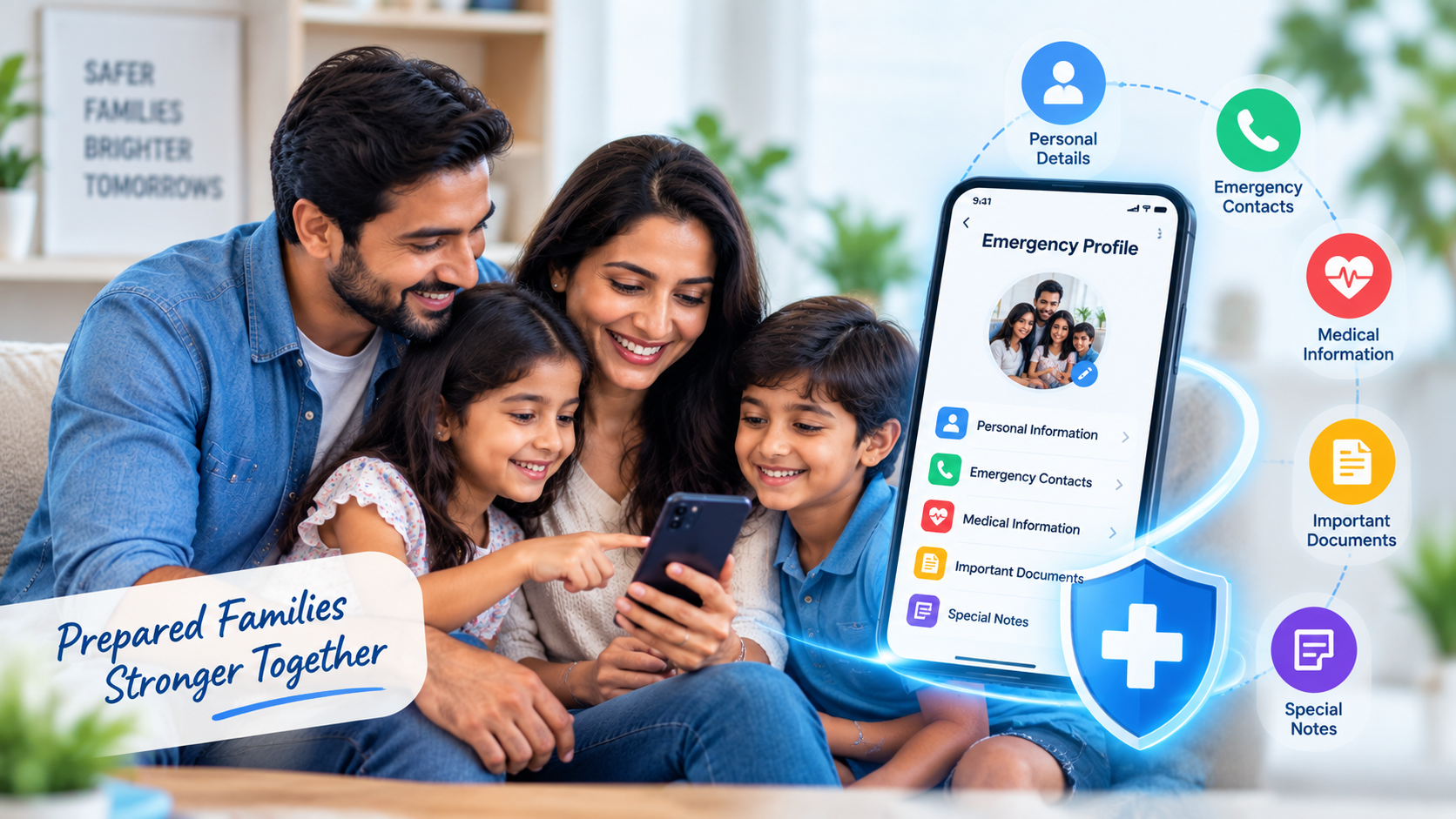
When something goes wrong, the people trying to help you rarely have the luxury of time. A paramedic kneeling beside you on the roadside, a school nurse trying to reach your child’s parent, a stranger who just watched someone collapse — every one of them is working against a clock, and the single biggest thing you can do to help them is make sure the right information is already waiting for them.
Most people assume their phone already does this job. It doesn’t. A locked screen, a forgotten password, or a phone that’s simply out of reach can turn a ten-second lookup into a ten-minute guessing game. An emergency profile — the kind built into apps like ICE Card — exists to close that gap, but only if it’s actually filled in properly. Here are the five details that matter most, and why each one earns its place.
1. Blood Group and Transfusion Notes
In a genuine medical emergency, especially one involving significant blood loss, knowing a patient’s blood group before lab results come back can shave critical minutes off treatment. Most people know their blood group in theory, but far fewer have it written down somewhere a stranger could find it. If you or a family member has ever had a transfusion reaction, or if there’s a documented rare subtype, that note belongs here too — it’s exactly the kind of detail a busy emergency room won’t have time to dig up on its own.
2. Allergies and Medication Sensitivities
Allergy information is one of the most commonly under-reported details in emergency care, largely because people forget to mention it when they’re unconscious or in shock. Penicillin allergies, reactions to anesthesia, or sensitivities to common painkillers can all change how a responder treats you on the spot. List not just the allergy but the reaction — a rash is very different from anaphylaxis, and responders make different calls based on severity. If a family member carries an EpiPen or a rescue inhaler, note where it’s usually kept.
3. Chronic Conditions and Ongoing Medications
Conditions like diabetes, epilepsy, asthma, or heart arrhythmias change what an emergency actually looks like from the outside. A diabetic having a hypoglycemic episode can look intoxicated to someone who doesn’t know their history, and that misread can delay proper care. The same goes for medications — blood thinners in particular are important to flag, since they affect how responders handle even a minor injury. Keep this list current; a profile with outdated medication information can be almost as unhelpful as an empty one.
4. Emergency Contacts, in the Right Order
Most people list one emergency contact and stop there, which works fine until that person doesn’t pick up. List at least two, ideally three, and put them in the order you’d actually want them called — a spouse or parent first, then a sibling or close friend who lives nearby and can act quickly. Include their relationship to you, not just a name, so a responder instantly understands who they’re speaking to and why that person’s answers can be trusted.
5. A Recent, Clear Photo for Identification
It sounds simple, but a current photo is one of the most overlooked pieces of an emergency profile. It helps responders confirm they have the right person, especially in situations involving confusion, language barriers, or an unconscious patient with no ID on them. This is also where verified identity features matter — a photo that’s been through a liveness check, the way ICE Card verifies profiles through face scanning, gives responders real confidence that the information in front of them actually belongs to the person they’re looking at.
A quick gut-check: if a complete stranger had thirty seconds with your emergency profile and no other context, would they know who to call, what you’re allergic to, and what medical history actually matters? If the answer is no, that’s the gap worth closing this week — not after something happens.
How Often You Should Actually Review It
An emergency profile isn’t a form you fill in once and forget about — it’s closer to a living document that should move whenever your life does. A new prescription, a resolved allergy, a change of address, or simply a new emergency contact after a move are all reasons to open the profile again. A reasonable habit is to check it twice a year, and to treat any major life event — a new diagnosis, a new job in a different city, a child starting school — as an automatic trigger to review it sooner. Outdated information isn’t harmless; a responder who calls a disconnected number or administers care based on a resolved condition is working with the same blind spot as someone with no information at all.
It also helps to think about who else should know this profile exists. A spouse, an adult child, or a close friend who might one day need to point a paramedic toward your phone should know that the QR code is there and roughly what it contains. An emergency profile that only you know about is still useful, but one that the people around you are aware of closes the loop entirely — because in a real emergency, it’s rarely the person in trouble who ends up guiding the response.
None of this needs to live in a drawer or a note on your phone that nobody knows exists. The whole point of a dedicated emergency profile is that it’s built to be found instantly — through a QR code that works even on a locked screen, or a face scan that confirms it’s really you, without an app to install or a password to remember. Building yours properly, with these five details actually filled in, takes less time than reading this article. Do it once, and it’s there for every emergency you hope never happens.